Source woven striped business tie for Wedding, Gift, Casual
Compare 30 listings for the woven striped business tie featuring options in silk and polyester with customizable designs. Buyers can review specifications like thickness, edge finishing, and packing details to find suitable suppliers for corporate or personal use.
Key considerations
Products List




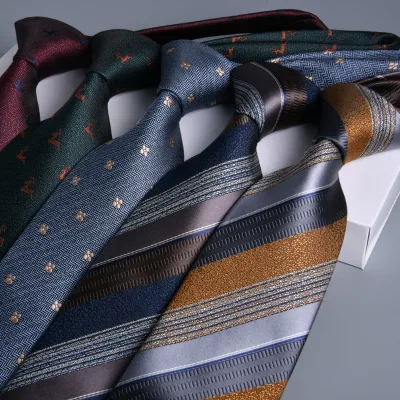
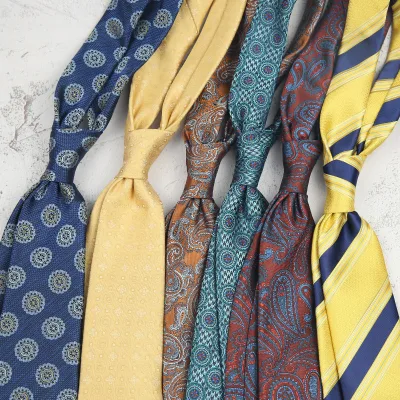
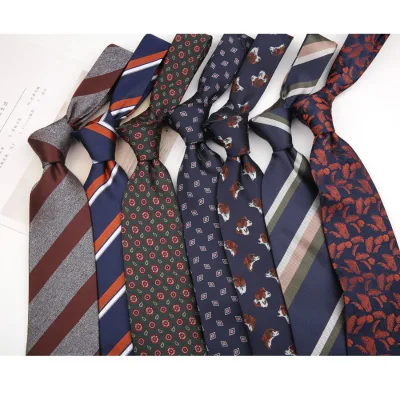


Comprehensive Sourcing Guide
Strategic Sourcing Guide for Woven Striped Business Ties
Understanding Product Specifications and Material Variability
When sourcing a woven striped business tie, the buyer must first navigate the inherent variability in product attributes presented in the market. The core keyword implies a specific aesthetic and construction method, yet the supplied data reveals a spectrum of materials and dimensions that define the final product. The primary material observed in high-quality options is 100% Silk, specifically noted as Silk Twill in some listings. This material choice is critical for achieving the desired drape and luster associated with formal business attire. However, the market also offers alternatives such as Micro woven Polyester, which serves as a cost-effective option while maintaining the structural integrity required for a business tie.
The construction technique is equally vital. The data indicates that "Printed" and "Jacquard" techniques are prevalent. A woven striped pattern often relies on the Jacquard technique to create the stripes directly into the fabric structure, ensuring the pattern does not fade or peel over time. Conversely, printed techniques may be used for more complex or custom designs, though the durability of the print is a factor to consider. The standard dimensions for these products vary, with observed specifications ranging from 9*145cm to 7x 148 cm. The thickness is another critical specification, with options available in 14mm, 16mm, and 18mm. For a classic business look, the 16mm or 18mm thickness is generally preferred to ensure the tie holds its shape and provides a substantial feel when knotted.
The edge finishing is another area where specifications diverge. Buyers should verify whether the tie features a Hand Rolling edge or a Machine Hemming edge. Hand rolling is typically associated with higher-end silk ties, offering a softer, more refined finish that prevents fraying and adds to the tactile quality. Machine hemming is a common alternative that offers consistency and lower production costs. The pattern itself can be observed as Striped, Floral, or Print, with Custom Designs being a possibility for buyers seeking unique branding. Understanding these variations allows the buyer to align their specific business requirements with the correct product specifications before engaging with suppliers.
Compliance, Certification, and Quality Assurance Protocols
In the realm of B2B procurement for textile accessories, compliance and quality assurance are non-negotiable, even when specific certification data is not explicitly listed in every product entry. The supplied context mentions "Needle detection: NA" for certain items, which indicates that buyers must actively verify this safety feature rather than assuming its presence. Needle detection is a critical quality control step to ensure that no metal fragments remain in the finished product, a standard requirement for many retailers and brands, particularly those selling to children or in markets with strict safety regulations.
While the provided data does not list specific certifications like OEKO-TEX or GOTS, the buyer must treat these as mandatory verification points. The origin of the products is noted as China, with specific mentions of Hangzhou as a production hub. Hangzhou is a known center for silk and textile manufacturing, but the presence of a location does not guarantee compliance with international environmental or labor standards. Buyers should request documentation proving that the 100% Silk or Micro woven Polyester materials are sourced responsibly and that the dyeing processes meet environmental regulations.
The "Needle detection" status being "NA" serves as a clear signal that this is not a default feature for all listed items. Therefore, the procurement strategy must include a specific clause in the purchase agreement requiring needle detection testing for the entire batch. Additionally, the "Product Name" is listed as "Tie," but the application is specified as "Gift, Wedding." This suggests that while the product is a business tie, it may also be marketed for ceremonial use. The buyer must ensure that the quality standards for a business tie (durability, colorfastness) are maintained even if the marketing angle shifts to gifting.
Quality control should also extend to the packaging. The data shows a mix of "Carton Boxes" and "One PP Bag One Piece" packaging. For business-to-business transactions, the packaging must protect the product during transit and present it professionally upon arrival. The single package size of 80X10X5 cm and a gross weight of 0.2 kg provide logistical data that must be accounted for in shipping calculations. The buyer should verify that the packaging is robust enough to prevent crushing, especially for silk ties which can be sensitive to pressure.
Cost Drivers and Pricing Structure Analysis
The pricing for woven striped business ties is influenced by a complex interplay of material costs, customization levels, and order volume. The observed price range in the market spans from 0.5 to 45 USD, a significant variance that reflects the difference between mass-produced polyester options and hand-finished silk products. The lower end of this spectrum likely corresponds to Micro woven Polyester ties with machine hemming and standard printed patterns. The higher end, approaching 45 USD, is typically reserved for 100% Silk ties with hand-rolled edges, custom Jacquard weaving, and specialized packaging.
Material cost is the primary driver. 100% Silk is inherently more expensive than Micro woven Polyester due to the raw material cost and the labor-intensive nature of silk production. The choice of fabric, whether Silk Twill or Polyester, will directly impact the final unit price. Furthermore, the customization level plays a massive role. The data indicates that "Customization: Available" and "Customized Designs: Possible" are standard offerings. Custom designs, including custom patterns, logos, or specific colorways, incur additional setup costs and often require higher minimum order quantities (MOQs).
The MOQ structure is another critical cost factor. The observed MOQ ranges from 1 to 100 units, but specific listings show requirements of 40 per color and 400 per order, or 50PCS. These thresholds are designed to cover the setup costs for looms and printing machinery. For a buyer seeking a small batch of custom woven striped ties, the unit cost will be significantly higher due to the fixed costs being amortized over fewer units. Conversely, larger orders benefit from economies of scale, reducing the per-unit cost.
Payment terms also influence the financial dynamics of the transaction. The available payment methods include T/T, Western Union, and Paypal. T/T (Telegraphic Transfer) is the standard for B2B transactions and often offers the most favorable pricing if a deposit is paid upfront. The "Sample Time" of 10-15 days and "Bulk Production Time" of 20-25 days indicate that the lead time is substantial. Buyers must factor in the cost of capital tied up during this production window. Shipping costs, which can be up to 45kg by air via FedEx, TNT, or UPS, are another variable. The choice between air and sea freight will significantly impact the total landed cost, especially for larger orders where the weight and volume increase.
Typical Applications and Market Positioning
The woven striped business tie serves a versatile role in the market, extending beyond traditional corporate wear. The data explicitly lists the application as "Gift, Wedding," indicating that these products are positioned for both professional and ceremonial use. In a business context, the striped pattern is a classic choice that conveys authority and tradition. The "Plain Dyed" and "Striped" styles are particularly suitable for corporate environments where a uniform or specific dress code is enforced. The "Casual" style noted in the data suggests that some variations of the tie are designed for smart-casual occasions, offering flexibility for buyers who need to cater to a broader range of client needs.
The "Client Brand OEM" attribute highlights the importance of private labeling. Many buyers in this sector are looking to create their own brand identity. The ability to customize the design, pattern, and packaging allows businesses to position the tie as a premium accessory. For wedding applications, the tie can be customized to match the wedding party's color scheme, making it a popular choice for groomsmen gifts. The "Design Pattern: Custom" feature supports this trend, allowing for unique floral or striped designs that stand out in a crowd.
The "Selling Units: Single item" designation suggests that the product is often sold individually, which is standard for ties. However, the "Supply Type: Make to Order" indicates that these are not typically off-the-shelf items. This makes them ideal for businesses that require specific branding or unique designs that are not available in mass-market retail. The "Feature: Breathable, Durable" attributes are crucial for the end-user experience. A tie that is breathable ensures comfort during long business days or formal events, while durability ensures that the tie maintains its appearance after repeated wear and cleaning.
The "Edge: Hand Rolling or Machine Hemming Edge" also influences the market positioning. Hand-rolled edges are often marketed as luxury items, suitable for high-end corporate gifts or premium wedding accessories. Machine hemmed edges are more accessible and suitable for bulk corporate orders where cost efficiency is a priority. Understanding these applications helps the buyer select the right product variant for their specific target market, whether it is a luxury boutique, a corporate uniform supplier, or a wedding accessory retailer.
Supplier Evaluation and Operational Logistics
Evaluating a supplier for woven striped business ties requires a thorough assessment of their operational capabilities, location, and communication standards. The data points to suppliers located in China, with specific mentions of Hangzhou. Hangzhou is a strategic location for textile manufacturing, known for its expertise in silk and weaving. However, the presence of a location does not guarantee quality; buyers must verify the supplier's actual production capacity and quality control processes. The "Needle detection: NA" finding underscores the need to ask suppliers directly about their safety protocols and whether they can provide third-party inspection reports.
Communication and sample processes are key indicators of supplier reliability. The "Sample Time" of 10-15 days and "Bulk Production Time" of 20-25 days provide a baseline for expected lead times. Buyers should confirm these timelines with the specific supplier, as delays can occur due to material shortages or production bottlenecks. The "Payment Ways: Paypal/Bank Transfer" and "Payment: T/T,Western Union ,Paypal" options offer flexibility, but buyers should prioritize secure payment methods that offer protection, such as T/T with a deposit and balance against shipping documents.
Logistics and shipping are critical components of the procurement process. The data lists shipping methods including FedEx, TNT, UPS, and DHL, with a weight limit of up to 45kg by air. For larger orders, sea freight may be a more cost-effective option, though it is not explicitly mentioned in the provided data. Buyers should calculate the total shipping cost based on the "Single gross weight: 0.2 kg" and the total order quantity. The "Single package size: 80X10X5 cm" and "prod_packing: One PP Bag One Piece" or "Carton Boxes" details are essential for planning storage and distribution.
Supplier evaluation should also include a review of their customization capabilities. The "Customization: Available" and "Customized Designs: Possible" attributes suggest that the supplier can accommodate unique requests. However, buyers should verify the minimum order quantities for custom designs, which are listed as "40 per color, 400 per Order" in some cases. This ensures that the buyer can meet the supplier's requirements without over-ordering. The "Model Number" variations, such as TWN034 and ZG-W2081, indicate a diverse product line, and buyers should ensure that the specific model they select meets their technical specifications.
Long-Term Procurement and Relationship Management
Building a sustainable long-term procurement relationship for woven striped business ties requires a focus on consistency, quality assurance, and adaptability. The "Supply Type: Make to Order" nature of these products means that the buyer and supplier must maintain close communication to ensure that production schedules align with market demands. The "Bulk Production Time" of 20-25 days is a fixed constraint that buyers must plan around, especially during peak seasons when demand for business attire and wedding accessories is high.
Quality consistency is paramount. The "Feature: Breathable, Durable" attributes must be maintained across all production batches. Buyers should implement a rigorous quality control process, including pre-shipment inspections, to ensure that the "Hand Rolling" or "Machine Hemming" edges are consistent and that the "Striped" or "Printed" patterns are accurate. The "Needle detection" requirement should be a standard clause in all future orders to maintain safety compliance.
Flexibility in design and material selection is another key aspect of long-term procurement. The market trends for business attire can shift, and buyers should work with suppliers who can adapt to these changes. The "Customized Designs: Possible" feature allows for innovation, enabling the buyer to introduce new patterns or materials as consumer preferences evolve. The "Brand Name: Client Brand OEM" option supports the development of a strong brand identity, which is essential for long-term success in the B2B market.
Finally, the buyer should establish clear communication channels and performance metrics with the supplier. Regular reviews of lead times, quality rates, and cost structures will help identify areas for improvement. The "Payment: T/T,Western Union ,Paypal" options should be standardized to streamline the transaction process. By maintaining a proactive approach to supplier management, the buyer can ensure a steady supply of high-quality woven striped business ties that meet their evolving business needs.
Comparative Analysis of Product Attributes
To facilitate a clear decision-making process, the following table summarizes the key product attributes observed in the market for woven striped business ties. This comparison highlights the variations in material, size, and packaging that buyers must consider.
| Attribute | Option A (Premium) | Option B (Standard) | Option C (Budget) |
|---|---|---|---|
| Material | 100% Silk (Silk Twill) | Micro woven Polyester | Micro woven Polyester |
| Pattern | Striped (Jacquard) | Striped (Printed) | Floral / Print |
| Edge Finish | Hand Rolling | Machine Hemming | Machine Hemming |
| Thickness | 16mm / 18mm | 14mm / 16mm | 14mm |
| Size | 7 x 148 cm | 9 x 145 cm | Standard |
| Packaging | Carton Boxes | One PP Bag | One PP Bag |
| MOQ | 40 per color | 50 PCS | 1 - 100 |
| Origin | Hangzhou, China | Hangzhou, China | China |
| Customization | High (Custom Designs) | Medium (Client Brand) | Low (Standard) |
This table illustrates that while the core product remains a business tie, the specific attributes vary significantly. Buyers must weigh the trade-offs between cost, quality, and customization to select the option that best fits their strategic goals. The "Needle detection" status remains a critical variable to verify for all options, as it is not universally guaranteed in the provided data. By carefully analyzing these attributes, buyers can make informed decisions that align with their specific procurement requirements.
FAQs
What materials are used for woven striped business ties?
The primary materials observed are 100% Silk and Micro woven Polyester. Silk options often feature a Silk Twill fabric, while polyester provides a cost-effective alternative. Buyers should verify the specific material composition before ordering to ensure it meets quality expectations.
How are the edges finished on these business ties?
Edges are finished using either Hand Rolling or Machine Hemming techniques. Hand rolling is typically associated with higher-end silk ties for a refined look, while machine hemming offers consistency and lower costs. The choice depends on the desired price point and aesthetic.
Can I request custom designs for these ties?
Yes, customization is available with possible custom designs and patterns. Buyers can specify patterns like Striped, Floral, or Print, and request client branding. Custom orders often require meeting specific minimum order quantities to cover setup costs for looms and printing.
What are the typical dimensions and thickness for these ties?
Standard sizes vary from 9*145cm to 7x 148 cm. Thickness options include 14mm, 16mm, and 18mm, with 16mm or 18mm preferred for a classic business look. These dimensions ensure the tie holds its shape and provides a substantial feel when knotted.
What are the minimum order quantities for these products?
Minimum order quantities range from 1 to 100 units, with specific listings requiring 40 per color or 50 pieces per order. Custom designs may have higher thresholds, such as 400 per order. Buyers should confirm the specific MOQ with the supplier before proceeding.
How long does production take for custom orders?
Sample production typically takes 10-15 days, while bulk production requires 20-25 days. These timelines allow for the creation of custom designs and ensure quality control. Buyers should factor in these lead times when planning their procurement schedule.
Where are these woven striped business ties manufactured?
Products originate from China, with specific manufacturing hubs noted in Hangzhou. Hangzhou is a known center for silk and textile manufacturing. Buyers should verify the specific factory location and ensure it meets their quality and compliance requirements.